
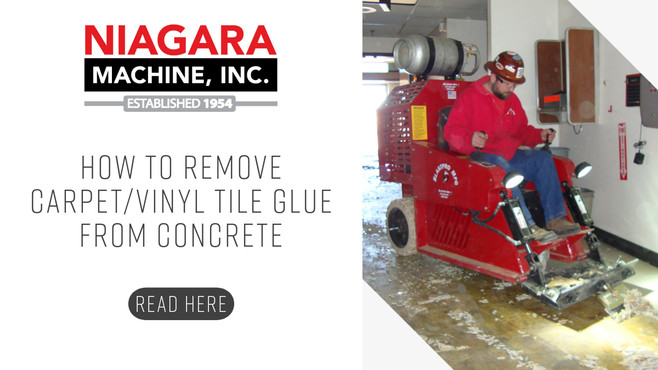
How to Remove Carpet/Vinyl Tile Glue from Concrete
21st Jul 2025
According to Statista, the sales volume of carpet and area rugs in the United States reached 11.36 billion square feet in 2023. This figure does include both residential and commercial projects. In 2023, the commercial carpet market accounted for $3.3 billion, driven primarily by commercial carpet sales. It might sound like a lot, but that included a 3.8% decline compared to the prior year. In 2018, 42% of the commercial market was held by carpet. Within 5 years, that percentage dropped to 38%. Mostly to Luxury Vinyl Tile and polished concrete. Commercial carpet represents a sizable portion of the overall flooring market, but its share has been declining in recent years, largely due to the increasing popularity of solid surface flooring.
Every time the carpet is changed to another floor system, it needs to be removed – and that is where we come in! The process consists of not only carpet removal but also removal of the adhesive used to bond it to the surface.
When the carpet is installed, an adhesive is used to bond the material to the floor. This might be a pressure-sensitive system where the adhesive is on the back of the carpet tile or a semi-liquid adhesive that is applied with a notched trowel. The latter is the most widely used. With either adhesive, they must be removed completely before the next system is installed.
Identifying the Glue and Assessing the Concrete
Before any flooring material is removed, an evaluation process must take place. So, what does the evaluation process entail?
- Final Flooring System
- What will the final installation be?
- What level of surface preparation is needed to install the final system?
- Are there any specific requirements to install the final system?
- Project Area
- Access to the area
- Into the building
- Within the building
- Environmental concerns
- Noise
- Dust
- Other humans in the area who are not on the installation crew.
- Ventilation
- Substrate
- This article is based on a concrete substrate. Do not attempt this with a wood substructure without experienced guidance.
- With flooring material covering the floor, evaluating the concrete substrate can be difficult unless it’s an elevated deck and there is access under the slab.
- Vinyl Tile/Carpet/Wood Removal
- If the tile is 9”x9” in size, have it assessed for asbestos. This was a customary practice to enhance the durability of tiles years ago. If it contains asbestos, STOP and contact the appropriate abatement company in your area to determine the removal process.
- Scrapers come in assorted sizes. Select one that fits the space and ensure the area can support the weight of the machine.
- Handheld
- Walk-behind
- Ride-on
- Adhesive Removal
- Type
- If the tile had been installed in the 60’s and 70’s and is black, it might contain asbestos and should be evaluated before removal.
- Thickness
- How well it’s bonded
- Rigid or flexible
- Type
- Access to the area
Tools and Equipment for Carpet Glue Removal
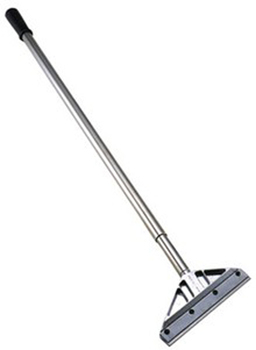
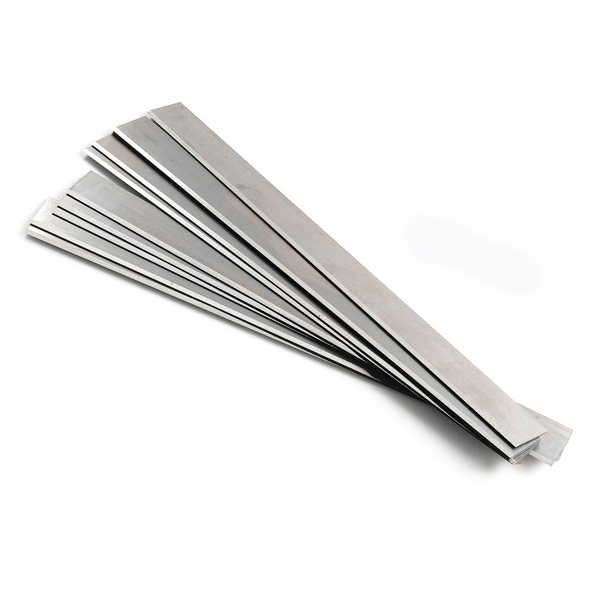
The first task is to remove the carpet or vinyl tile flooring material. This is an ideal job for a scraper. Floor Scrapers come in varied sizes. There are hand-held scrapers used for hard-to-reach places. These have a blade holder attached to a pole. The blades that are used are sharp and replaceable.
There will be times when a small-sized power scraper will be needed. They use less human energy than a handheld. These machines are lightweight with a small footprint. They can be transported in a normal pick-up truck, making them available without the use of a trailer or box truck.
The scraping action is like its larger counterpart, but much easier to use in tight quarters.
Notable features include:
- Easy blade angle adjustment
- Adjustable handle
- Large wheels roll easily over job site debris
- Noticeably quiet operations
- Low vibration in handle
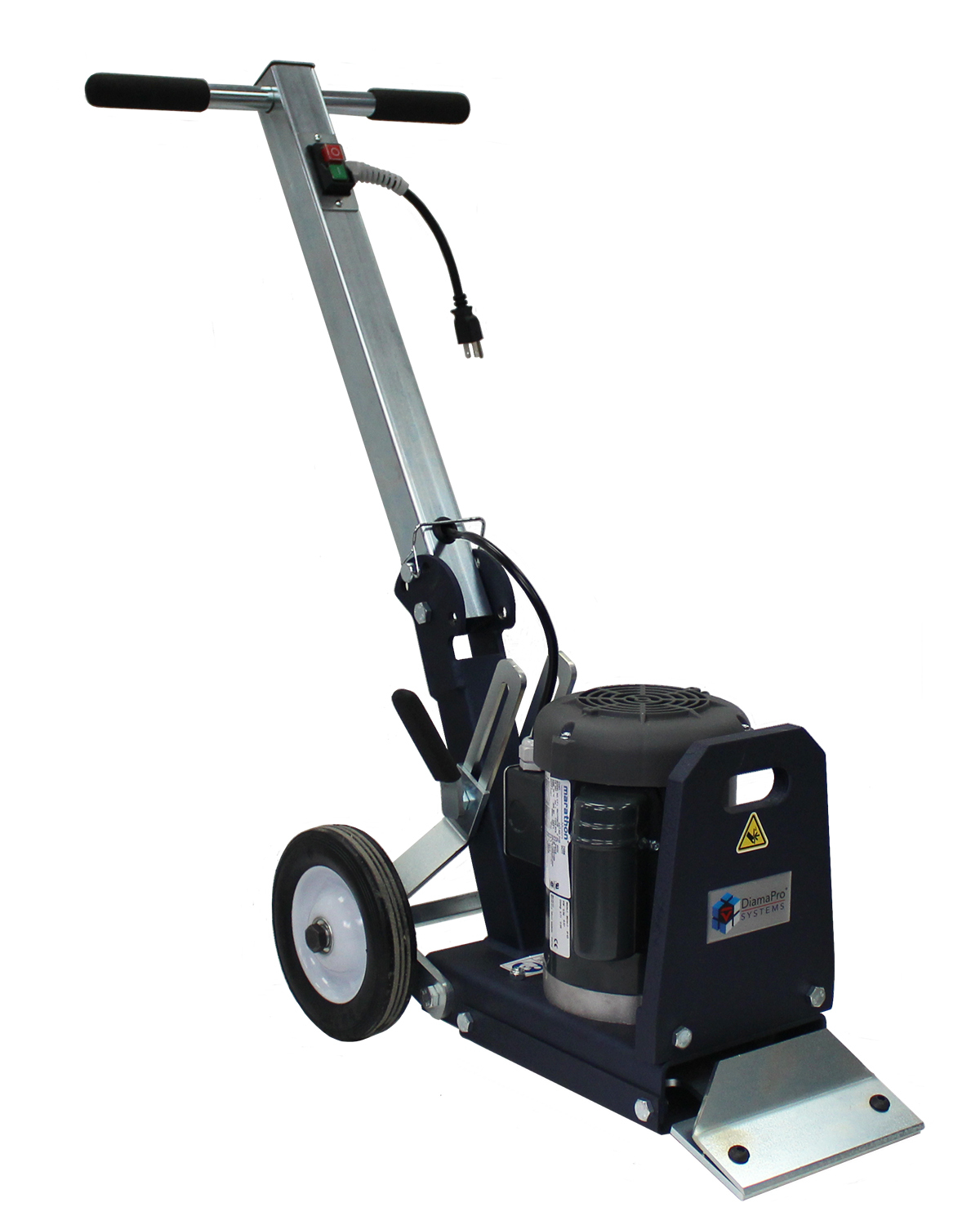
Small Walk Behind Power Scraper
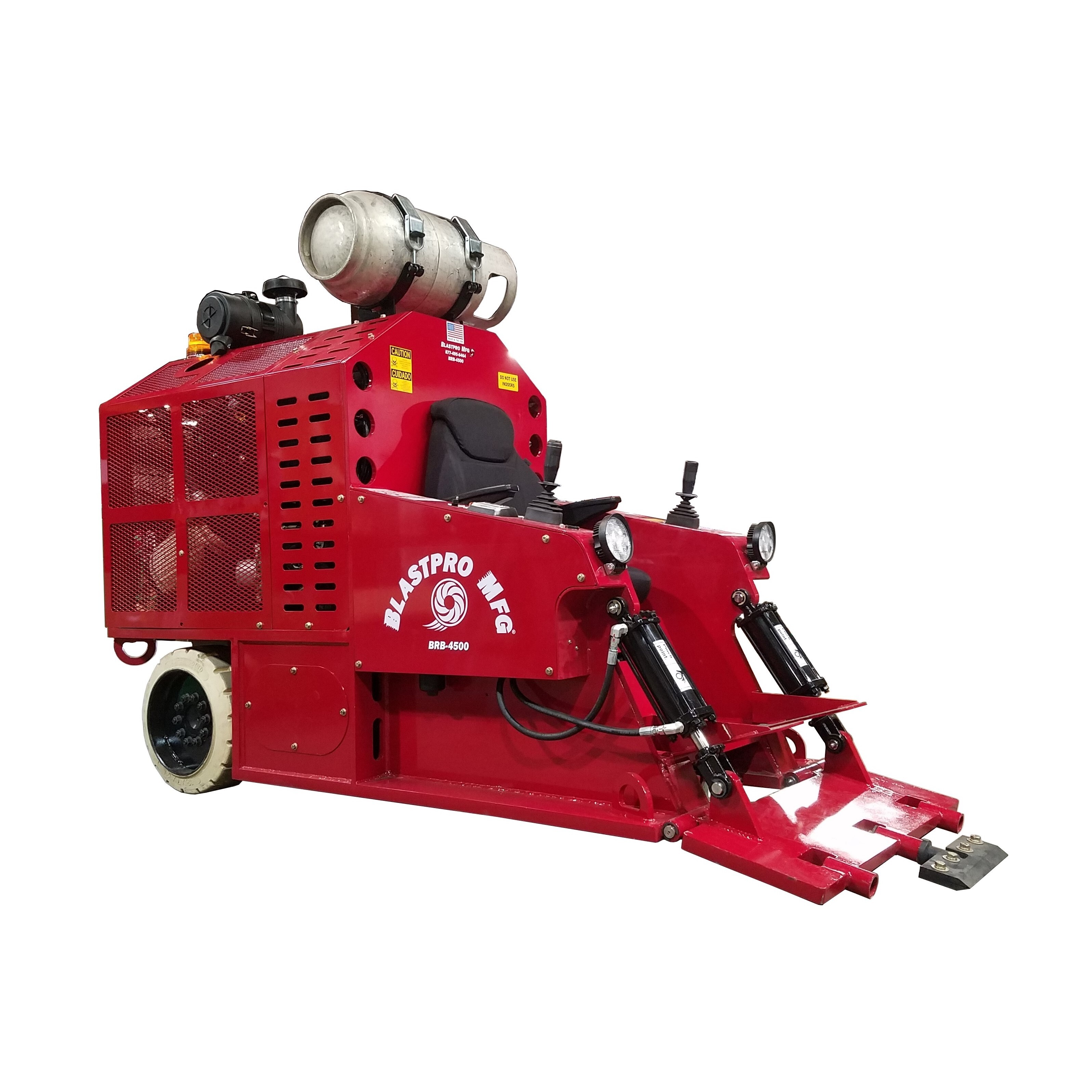
The next step up in scraper design consists of the ride-on models. These machines are big, heavy, and will not easily fit into a small space. When you are tackling a large removal, there are no other machines with the production rate that these provide. It doesn’t matter what you are removing; with the correct blade attached, it will remove it.
After the flooring material has been removed, there could be adhesive remaining on the floor. Note that a scraper will not remove all the adhesive, and for a new floor system to be installed, you will need a completely clean concrete surface. That is when a concrete grinder will really help. There is abrasive tooling that will scrape (not grind) it from the floor.
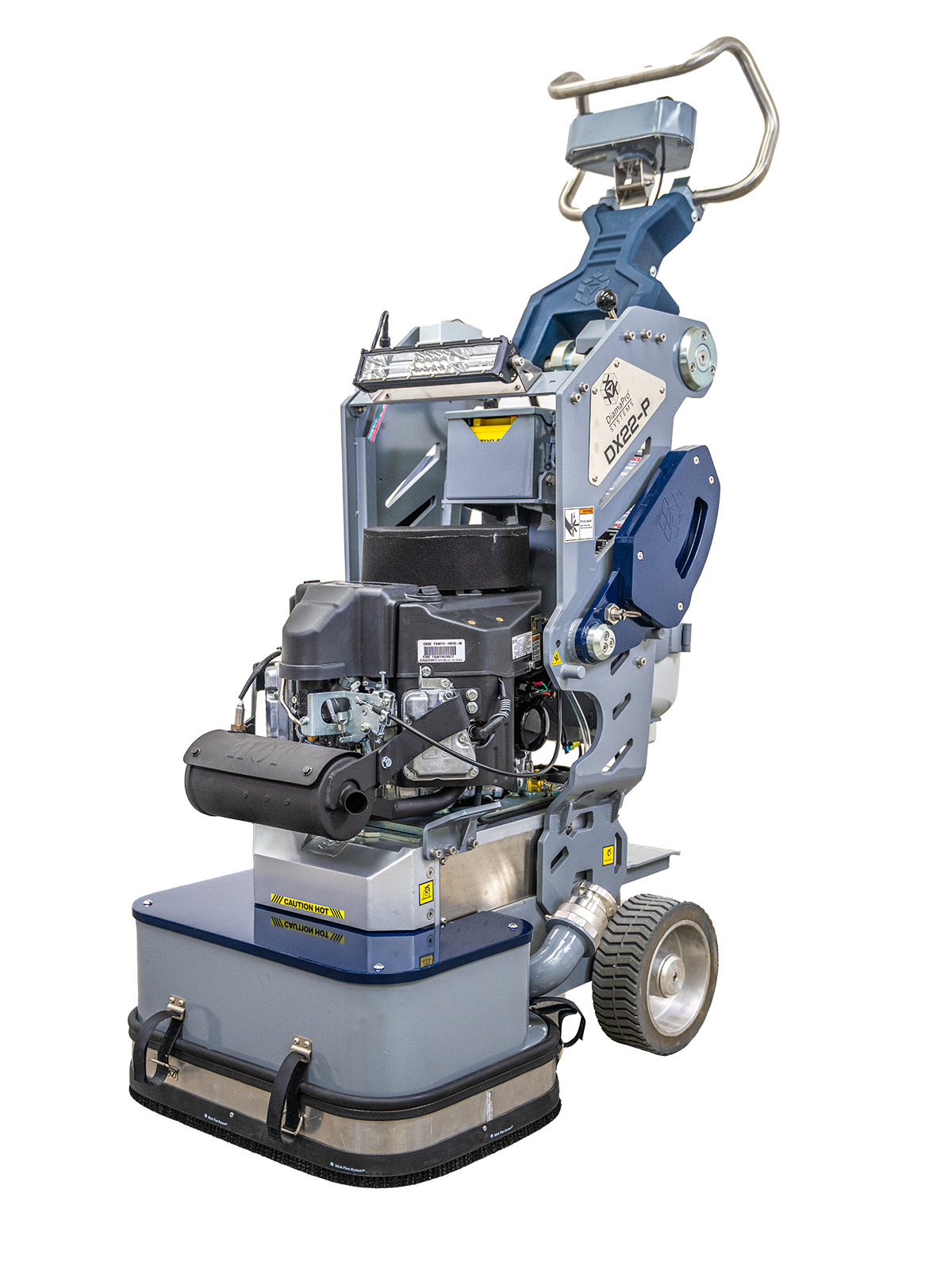
DX22-P Walk Behind Concrete Grinder
Methods for Removing Carpet Glue
Adhesives that are used to install carpet and tile have different consistencies and chemical make-ups. Most have a level of flexibility. This is important when bonding flexible material such as rubber flooring to a concrete substrate. The rubber allows for substrate movement and requires the adhesive to do the same. If a rigid adhesive is used, unwanted stress will be placed on the bond line of the flooring material.
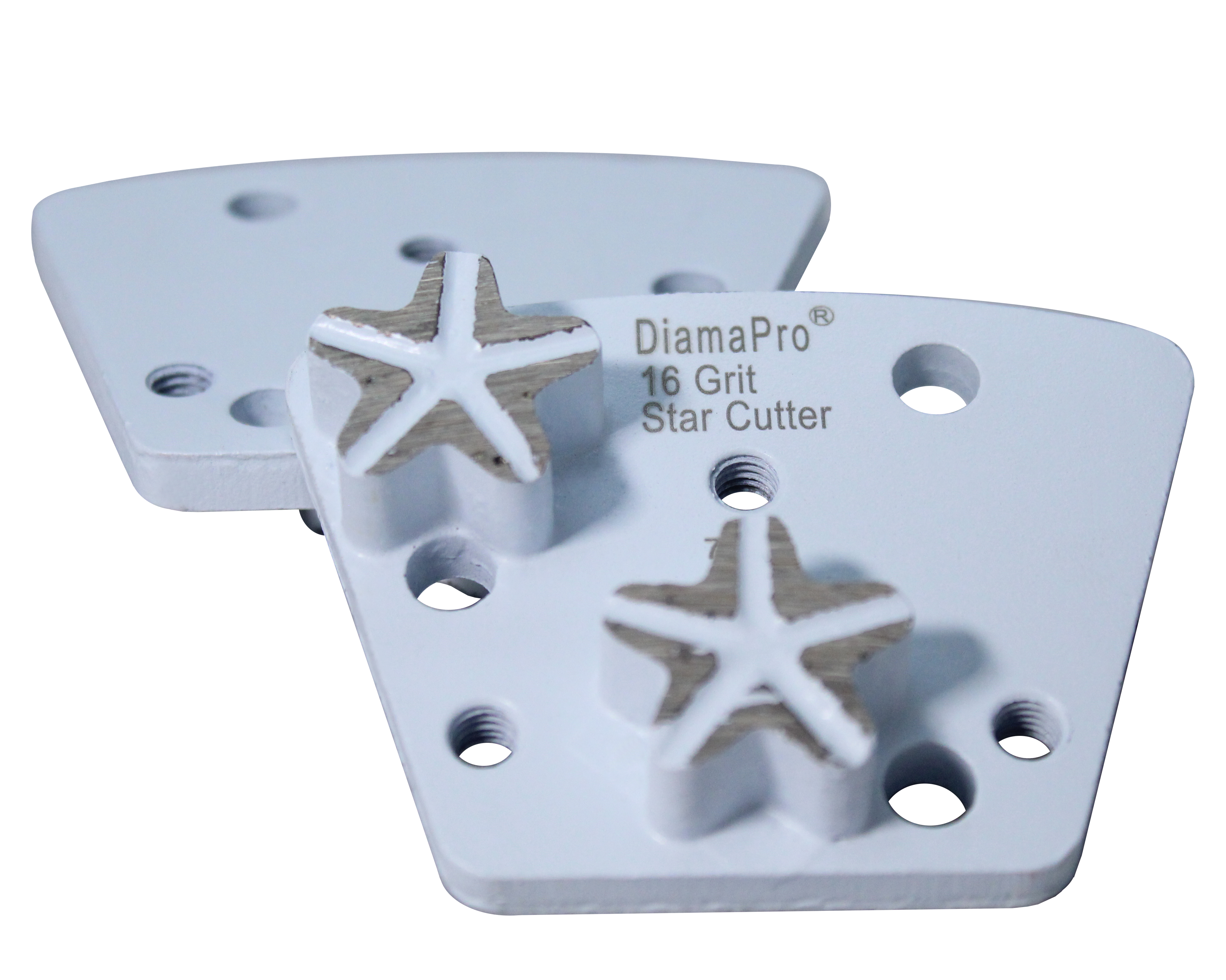
When removing a flooring system that used a flexible adhesive during installation, the scraper should remove the bulk of the glue. The remaining glue residue will require another removal method. There are choices available when selecting the tooling when grinding. One that should be considered for the application is a Carbide Scraper. Carbide Scraper removal tools are ideal for fast removal of thick topical coatings, glue, and adhesive. They can be used without damaging the concrete underneath and are safe to use on floors that will be polished. Carbide scraper tools feature replaceable tungsten carbide blades that quickly and easily remove thick glues, rubbery mastics, and elastomeric coatings that metal bond abrasive tools cannot remove effectively because they will gum up and smear the adhesive.

When the adhesive is rigid, a traditional 30-grit metal bond diamond tool can be used. Rigid adhesives will react like the concrete substrate while it’s being ground. When grinding, the tool will not only be removing the glue, but it will also be grinding the substrate. Grinding the concrete at the same time will help keep the diamond particles from clogging and being coated with adhesive, reducing their ability to cut.
Preparing the Concrete Surface After Glue Removal
Once either type of glue has been removed or there is minimal left, using a grinder fitted with 30-grit metal bond tooling will clean the surface, exposing only concrete. Once finished with the 30s, you can then provide the required surface preparation level for the flooring system that will be installed.
Conclusion
Removing carpet or vinyl tile glue adhesive can be a daunting process. Once the flooring material is removed, you might be looking at a gooey mess. Trying to rid the surface of this sticky material without using the proper techniques can be a long, drawn-out process.
Surface preparation is an industry in its own. Companies such as Niagara Machine specialize in the means and methods to properly prepare a concrete surface. We have spent decades perfecting preparation methods to increase the productivity of the contractor. We sell everything you need to rid the surface of this nasty glue!