
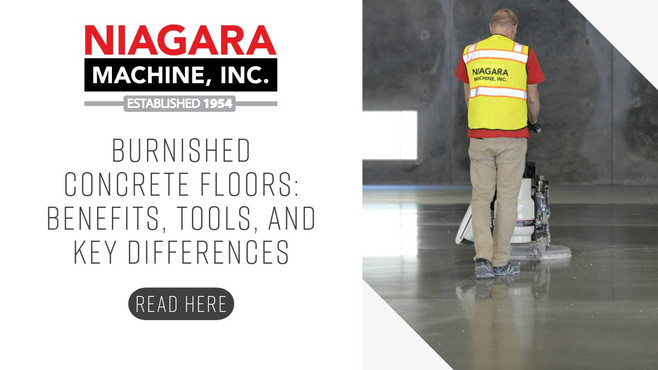
Burnished Concrete Floors: Benefits, Tools, and Key Differences
13th Oct 2025
Concrete has long been a trusted flooring choice for warehouses, retail spaces, and commercial facilities. But in recent years, it has also made its way into offices, schools, and even residential settings. One of the most attractive options in the decorative concrete world is the burnished concrete floor. This sleek, glossy surface offers durability, easy maintenance, and a professional finish that rivals more expensive flooring systems. In this guide, we’ll explore the benefits of burnished floors, the tools needed to achieve them, and the key differences between burnishers and buffers.
What Is a Burnished Concrete Floor?
A burnished concrete floor is concrete that has been polished to a high-gloss shine without the use of heavy topical coatings. Unlike polished concrete, which involves mechanical grinding with diamond abrasives, burnishing uses a high-speed floor burnisher to heat, melt, and buff a chemical coating (such as a guard or wax) into the surface. The result is a smooth, reflective floor that enhances the natural beauty of concrete.
Burnishing is often chosen for spaces where aesthetics and performance matter—think retail showrooms, office lobbies, and schools. It provides a glossy, professional look while still retaining the toughness of concrete.
Benefits of Burnished Concrete Floors
1. Low Maintenance
Burnished floors are relatively easy to maintain compared to other flooring types. Regular dust mopping and occasional cleaning with an auto scrubber are typically all that’s needed. The glossy finish also makes it easier to spot dirt or spills, ensuring a cleaner overall appearance.
2. Cost-Effective Finish
Because burnishing doesn’t require extensive grinding or multiple coats of epoxy or polyurethane, it’s more affordable than polished concrete or coated flooring systems. This makes it an attractive option for budget-conscious projects that still want a high-end look.
3. Durability
Concrete itself is already durable, but burnishing enhances its resistance to wear. The heat and friction generated by the burnisher create a denser surface that helps resist scratches, scuffs, and stains.
4. Eco-Friendly Option
Since burnished concrete floors typically don’t require thick topical coatings or adhesives, they minimize the use of potentially harmful chemicals. Plus, using the existing concrete slab reduces the need for additional flooring materials, making this option sustainable and environmentally friendly.
5. Aesthetic Appeal
The high-gloss sheen achieved with burnishing gives spaces a modern, upscale look. Light reflects beautifully off the surface, making rooms appear brighter and more spacious.
What Is a Floor Burnisher?
If you’ve wondered, “What is a floor burnisher?" here’s the answer: A floor burnisher is a high-speed machine designed to polish and shine floors by rotating a pad at speeds of 1,500–2,500 RPM. The friction created by the pad heats the floor finish, helping it meld into the concrete, thus creating a glossy and durable surface.
Burnishers are most commonly used on concrete, vinyl composition tile (VCT), terrazzo, and other hard flooring types. They are the go-to tool for facilities that need to maintain a professional, polished look with minimal effort.
Floor Burnisher vs Buffer: Key Differences
It’s easy to confuse burnishers with buffers since both are used for floor care. However, they are not the same. Here’s a clear breakdown of the floor burnisher vs buffer debate:
-
Speed: Buffers operate at low speeds (175–300 RPM), making them ideal for scrubbing, stripping, and cleaning. Burnishers run at much higher speeds (1,500–2,500 RPM) and are specifically designed for polishing and producing a glossy finish.
-
Purpose: A buffer prepares the floor by cleaning or stripping away old coatings. A burnisher finishes the floor by polishing it to a shine.
-
Result: Buffing results in a satin or semi-gloss finish. Burnishing produces a high-gloss, mirror-like surface.
-
Applications: Buffers are ideal for maintenance tasks such as scrubbing or stripping wax. Burnishers are the tool of choice when the goal is a durable, polished shine.
Think of it this way: if the buffer is the “cleaner,” the burnisher is the “finisher.”
Tools and Supplies for Burnishing Concrete Floors
To achieve the best results, you’ll need the right tools and products. Here are the essentials:
-
Floor Burnisher – A high-speed burnisher with the right pad driver is key. Propane, battery, and electric models are available depending on the job site.
-
Burnishing Pads – Specialized pads, often made of natural hair or synthetic fibers, are designed to withstand high RPMs and generate the heat necessary for achieving a gloss.
-
Concrete Guard or Finish – Applying a guard or topical treatment enhances protection and increases gloss when burnishing.
-
Dust Mop & Auto Scrubber – For ongoing maintenance, these tools help keep the floor clean and preserve the burnished finish.
Is Burnishing Right for Your Floor?
Burnished concrete floors are an excellent choice for commercial facilities, offices, schools, and even residential spaces where aesthetics and low maintenance are priorities. They’re especially appealing for projects that want the modern look of polished concrete but need a quicker, more cost-effective solution.
However, keep in mind that burnishing doesn’t level or refine concrete the way full mechanical polishing does. If your slab has major imperfections, a concrete grinder and a polished concrete system may be more suitable.
A burnished concrete floor delivers beauty, durability, and practicality in one package. With the right floor burnisher, pads, and maintenance routine, you can achieve a high-gloss surface that stands the test of time. And when you understand the difference between a floor burnisher vs buffer, you’ll know exactly which tool to use for the finish you want.
Whether you’re managing a retail showroom, office lobby, or school hallway, burnishing offers a cost-effective way to transform plain concrete into a polished, professional-looking floor.