
Concrete Expansion Joints: Purpose, Types, and Installation Best Practices
25th Feb 2026
Concrete slabs are constantly moving. Thermal expansion, contraction, moisture changes, and load stress all create internal pressure within a slab. Without a properly designed concrete expansion joint, that pressure has only one place to go: into cracks, spalls, and edge failure.
In commercial and industrial environments—warehouses, distribution centers, manufacturing plants, and parking structures—joint failure can quickly turn into operational downtime and expensive repairs. Forklifts hit broken edges. Coatings delaminate. Polished concrete chips at joint lines.
This guide breaks down the practical realities of expansion joints in concrete, including how they function, where they’re required, which filler systems perform best, and how surface preparation directly impacts long-term durability.
What Is a Concrete Expansion Joint?
A concrete expansion joint is a full-depth separation between slabs designed to accommodate slab movement caused by temperature changes, shrinkage, and structural shifting. Unlike saw-cut control joints, which encourage controlled cracking, expansion joints are intentional movement zones.
Concrete Control Joints vs Expansion Joints
Understanding concrete control joints vs expansion joints is critical:
- Control joints are saw-cut into the slab to control where cracks form.
- A concrete expansion joint fully separates slabs to allow movement.
- Isolation joints are often installed around columns and fixed structures to prevent stress transfer.
In large commercial slabs, expansion joints in concrete are necessary to relieve stress across wide spans. Without them, slabs can heave, crack randomly, or push against walls and structural elements.
Common problems caused by missing or failing joints include: edge spalling, joint widening, filler breakdown, and slab curling/cracking.
Where Expansion Joints Are Used in Concrete Floors
Expansion joints in concrete appear in both interior and exterior applications, but the placement strategy varies.
Interior Slabs
- Warehouses and distribution centers
- Manufacturing plants
- Retail and commercial floors
- Data centers and healthcare facilities
High-traffic environments require joint systems that withstand repeated wheel loads and joint movement in concrete slabs without edge deterioration.
Exterior Slabs
- Parking decks
- Sidewalks
- Loading docks
- Drive lanes
Exterior slabs experience more aggressive thermal cycling, making a properly designed concrete expansion joint even more critical.
Around Fixed Structures
Expansion joints are commonly installed around columns, at wall intersections, and between slabs and foundations.
For polished concrete and coated floors, joint design directly affects final aesthetics and coating adhesion. Poorly prepared or improperly filled joints can telegraph through decorative finishes.
Types of Expansion Joints in Concrete

Pre-Molded Expansion Joints
Installed during slab placement, these compressible materials allow movement from day one. Common in exterior slabs and structural transitions.
Saw-Cut Joints Designed for Filler Systems
These joints are cut after curing and later filled with a concrete expansion joint filler designed to support traffic loads.
Isolation Joints
Used around columns or walls to prevent stress transfer from the slab to structural components.
Each system serves a specific function. Specifying the wrong type can compromise slab performance and shorten service life.
Concrete Expansion Joint Filler Options
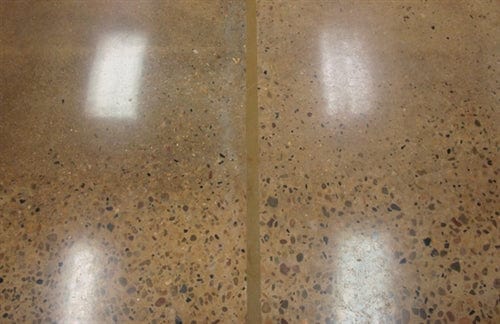
Selecting the correct concrete expansion joint filler is just as important as joint placement.
Semi-Rigid Joint Fillers
- Polyurea
- Epoxy
These products are common in warehouses and industrial facilities. A semi-rigid concrete expansion joint filler supports heavy wheel traffic while allowing limited movement.
Flexible Joint Fillers for Concrete Floors
More elastic sealants are used where significant expansion and contraction occur, particularly in exterior slabs.
Load-Bearing vs Non-Load-Bearing Fillers
In forklift traffic areas, using a non-load-bearing filler can lead to rapid edge spalling. Understanding joint movement requirements and load conditions is essential when specifying a concrete expansion joint system.
The wrong filler can lead to premature cracking, adhesion failure, joint separation, and/or increased maintenance cycles.
Best Practices for Installing and Maintaining Expansion Joints
Proper installation determines whether a concrete expansion joint performs for years or fails within months.
Joint Depth and Width
- Follow project specifications for width-to-depth ratios.
- Ensure the filler matches anticipated slab movement.
Surface Preparation Requirements
Before installing any concrete expansion joint filler, joints must be:
- Properly cleaned
- Free of dust and debris
- Structurally sound along joint edges
Grinding joint walls ensures proper adhesion and removes weak laitance. Professional-grade Concrete Grinding Machines are commonly used to prepare joint edges before filling.
Dust control is equally critical. Our selection of industrial-grade Industrial Vacuums & Dust Extractors helps eliminate contamination that can cause filler failure.
Routine maintenance is also part of long-term joint performance. High-traffic facilities may require refilling cycles as materials wear.
How Surface Preparation Impacts Expansion Joint Performance
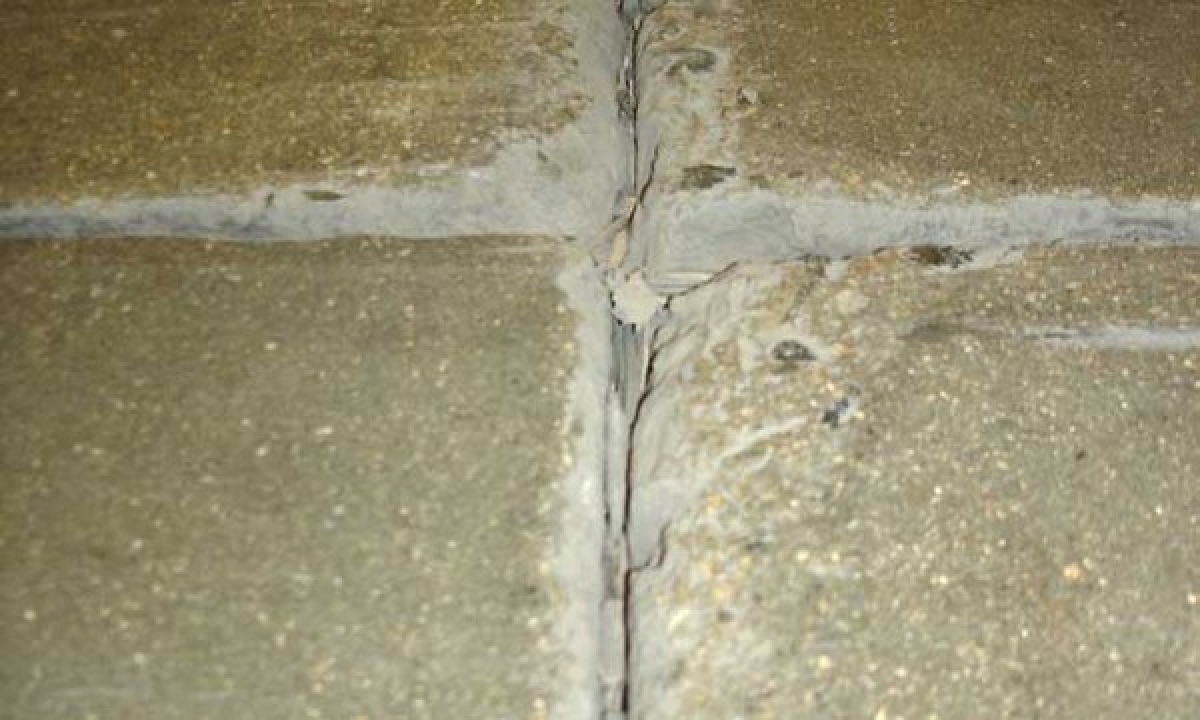
Many expansion joints in concrete fail not because of product quality, but because of inadequate preparation.
Clean, properly profiled joint edges improve adhesion, load transfer performance, and long-term flexibility.
Using professional surface prep tools from our walk-behind concrete saw lineup helps ensure joints are ready for filler installation.
Skipping preparation can lead to:
- Filler debonding
- Air pockets
- Uneven curing
- Edge deterioration
Surface prep isn’t optional—it’s foundational to joint performance.
Common Mistakes to Avoid with Expansion Joints in Concrete
Even experienced contractors can encounter issues with expansion joints in concrete when critical details are overlooked.
1. Using the Wrong Filler
Heavy traffic requires a properly rated concrete expansion joint filler.
2. Ignoring Joint Movement in Concrete Slabs
Not accounting for slab expansion leads to filler cracking or compression failure.
3. Overfilling or Underfilling Joints
Incorrect placement height can create stress points or trip hazards.
4. Skipping Surface Prep
Dust and weak joint walls significantly reduce adhesion and long-term performance.
Conclusion
A concrete expansion joint is not an afterthought—it’s a structural necessity. From thermal movement to heavy equipment traffic, slabs depend on properly designed expansion joints in concrete to prevent cracking and premature failure.
Choosing the right concrete expansion joint filler, understanding joint movement requirements, and investing in professional surface preparation all work together to extend slab life and reduce long-term repair costs.
For contractors and facility managers looking to improve joint durability, high-quality surface prep equipment and dust control systems from Niagara Machine provide the foundation for longer-lasting concrete performance.